Rio de Janeiro Events 2026: Beyond Carnival
Carnival brings four million people to Rio. What most visitors don't realize is that the city runs a full, dense events calendar for the other 50 weeks of the year. Rio has one of the most active music festival scenes in South America, a growing tech and startup event circuit, cultural festivals tied to Afro-Brazilian traditions that run year-round, and a nightlife and live music ecosystem that operates regardless of what month you arrive.
The Carnival Frame — and Why It Limits How People See Rio
Carnival is the city's most famous event by a wide margin. The Sambódromo parades and the hundreds of blocos (street parties) that take over neighborhoods from Santa Teresa to Ipanema are genuinely unlike anything else in the world. But treating Carnival as Rio's events identity misses most of what the city offers.
For a head-to-head comparison of Rio's Carnival versus Barranquilla's and Bolivia's Oruro, see the Carnival in Latin America comparison guide.
This guide covers everything else.
Rio's Neighborhoods as Event Contexts
| Neighborhood | Character | Events it hosts |
|---|---|---|
| Lapa | Bohemian, historic, nightlife hub | Live samba, forró, indie music, weekend street events |
| Santa Teresa | Hillside arts district | Gallery openings, small Cultural Festivals, art walks |
| Ipanema / Leblon | Upscale beach strip | Beach concerts, food festivals, upscale networking events |
| Barra da Tijuca | Suburban, large-venue | Major concerts, trade shows, tech conferences |
| Centro | Financial district | Business Events, conferences, corporate networking |
| Lapa Arcos area | Weekend street events | Open-air parties, live music under the Arcos da Lapa |
| Botafogo | Young professional | Startup meetups, co-working events, indie shows |
| Tijuca | Residential | Community festivals, Carioca cultural events |
Lapa is the living heart of Rio's nightlife and music event scene. The Arcos da Lapa (an 18th-century aqueduct that frames the neighborhood) is the visual anchor for weekend street parties that spill through Friday and Saturday nights. Live samba, chorinho, and forró venues cluster within a few blocks. No visit to a music event in Rio is complete without time in Lapa.
Barra da Tijuca on the western side of the city handles Rio's large-scale commercial events — the Rio Centro convention complex is one of the largest convention and exhibition centers in South America and hosts trade shows, major tech conferences, and business events that need tens of thousands of square meters.
Rio's Event Calendar: Season by Season
January–March (Summer + Carnival) Peak event season. Carnival itself dominates February, but the pre-Carnival period from January runs blocos and warm-up events across the city. Post-Carnival in March, the city exhales and returns to a normal rhythm — summer beaches, outdoor concerts, and the early start of Rio's arts events season.
April–June (Autumn) A transitional window that suits visitors who want the city without the crush. Business Events and Tech Conferences at Rio Centro pick up in Q2. The contemporary arts scene in Santa Teresa and Botafogo runs gallery shows. The Rio das Ostras Jazz & Blues Festival draws musicians from across Brazil to a coastal city near Rio.
July (Winter + Rock in Rio off-years) Rock in Rio is one of the largest music festivals in the world when it runs, drawing international headliners to the Cidade do Rock in Barra da Tijuca. When it does run, it typically lands in late September/early October. In July, Rio's winter festival season includes the Festa de São João celebrations — though the main Festa Junina celebrations are often more intense in the Northeast, Rio's version still generates neighborhood street events with forró music and traditional food.
August–September (Late Winter / Spring) A strong window for Business Events and professional networking. The startup and tech ecosystem in Rio — anchored by companies in Botafogo and Centro — runs active event programming. The Fundação Getúlio Vargas (FGV) and other Rio-based institutions host professional events and executive education events.
October–November (Spring) This is when Rio's tech and cultural events hit a second peak. Rock in Rio is typically the headline event of the year when it runs. The ABCine Brazilian Animation Festival and other film and arts events activate the Centro and South Zone.
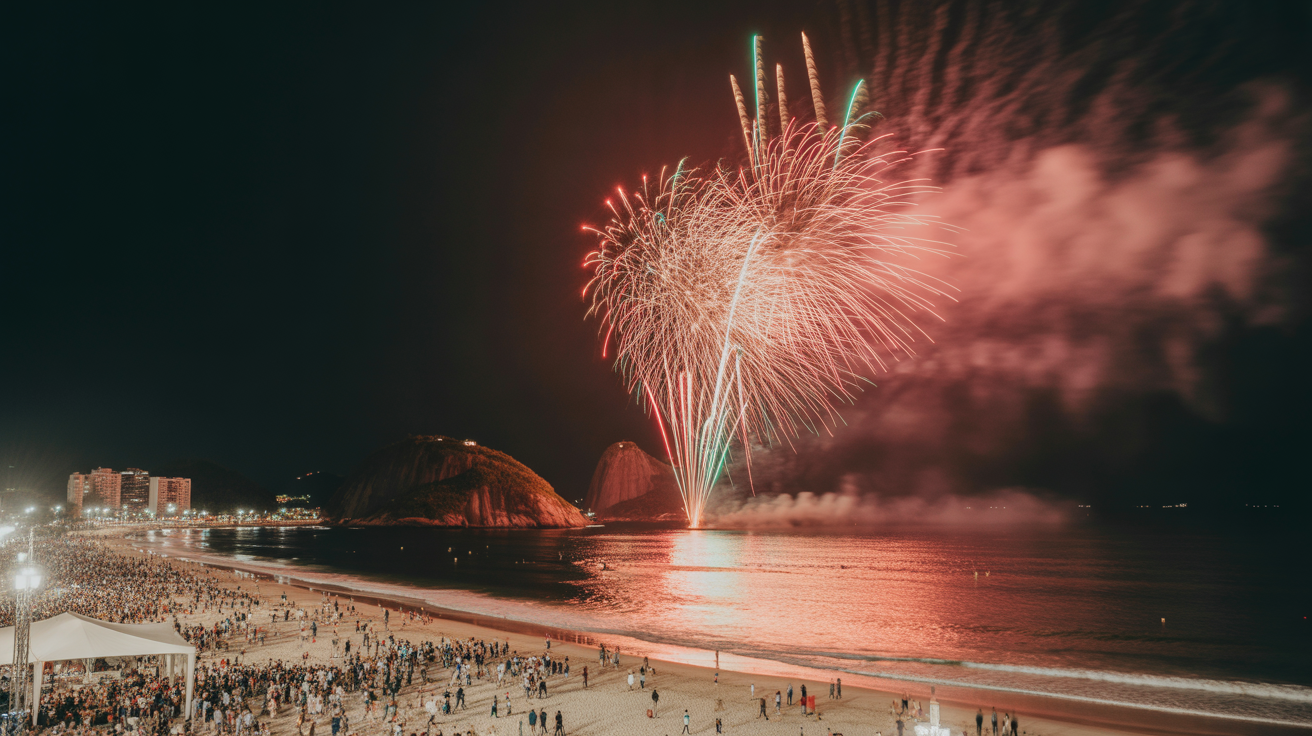
December (Summer Again) New Year's Eve on Copacabana beach is one of the largest free public events in the world. The lead-up through December runs outdoor concerts, seasonal street events, and the beginning of the pre-Carnival bloco season.
The Six Event Categories in Rio
Tech Conferences — Rio's tech ecosystem is growing, with strengths in fintech, oil and gas technology (tied to Petrobras), and a digital media sector. The city hosts regional summits and international delegations, primarily at venues in Barra da Tijuca and Botafogo.
Startup Events — Rio has a visible startup community in Botafogo, connected to investment networks in São Paulo. Pitch events, founder meetups, and accelerator demo days run through the year. The broader São Paulo ecosystem means some founders commute between cities for events.
Music Festivals — This is Rio's strongest category beyond Carnival. Rock in Rio operates at a scale that few festivals in the world match — over 100,000 attendees per day across multiple stages. Beyond that: jazz festivals, electronic music events at Barra venues, live samba in Lapa every weekend, and smaller independent festivals in Botafogo and Santa Teresa.
Business Events — Rio Centro hosts some of Brazil's largest trade shows across oil and gas (Rio Oil and Gas), tourism, health, and food sectors. International business travelers should note that Rio functions as both a tourist capital and a genuine commercial center for specific industries.
Cultural Festivals — Afro-Brazilian traditions permeate Rio's cultural calendar. Candomblé and Umbanda celebrations, neighborhood samba school rehearsals open to visitors in the pre-Carnival months, and street art festivals in Santa Teresa and Lapa create a cultural calendar that runs parallel to the formal events circuit. The Parada do Orgulho LGBT is one of the largest in Brazil.
Networking Events — Rio's professional networking scene is less dense than São Paulo but genuinely active in the startup and tech community. Co-working spaces in Botafogo and Centro host regular meetups. International networking events often have bilingual formats to accommodate the city's large international business visitor base.
Practical Notes for Event-Goers in Rio
- Getting around: Rio's metro connects the South Zone (Ipanema, Copacabana, Botafogo) to the Centro, but Barra da Tijuca requires a bus or ride-share. For events in Lapa, the metro runs until midnight on weekdays and later on weekends. Ride-sharing apps operate city-wide.
- Safety: Rio's neighborhood character varies significantly. Lapa is active but requires the same city-street awareness as any nightlife district. Ipanema, Leblon, and Botafogo are consistently safer for international visitors. Check current guidance and use judgment about transport late at night.
- Language: The majority of events run in Portuguese. Tech conferences and multinational business events increasingly offer English tracks. Nightlife in Lapa is accessible regardless of language.
- Ticket prices: Highly variable in Brazilian reais. Free blocos and street events through to Rock in Rio day passes running R$400–900+. Always check the event page for current pricing.
FAQ
What big events happen in Rio besides Carnival? Rock in Rio is the other headline global event. The Réveillon on Copacabana for New Year's Eve draws millions for a free public event. Business-wise, Rio Oil and Gas is one of the largest trade shows in South America. Year-round, live samba in Lapa runs every weekend without needing a ticket.
When is Rock in Rio 2026? Rock in Rio runs in alternating years in Rio.
Is Rio worth visiting for events outside of Carnival? Absolutely. The city's music scene — especially in Lapa — operates year-round. Tech and Business Events concentrate in Barra da Tijuca. The cultural calendar of samba schools, Afro-Brazilian traditions, and arts events runs independently of Carnival timing.
Where do tech conferences take place in Rio? Primarily at Rio Centro convention complex in Barra da Tijuca and at hotel conference facilities in the Centro and Botafogo. Smaller community events run in co-working spaces in Botafogo.
How do I find events in Rio this week? Use events.lat/map filtered to Brazil, or check local publications and Facebook Events for community listings. For ticketed shows and concerts, local platforms like Ingresso.com handle most sales.
Summary
Rio's identity is so bound up with Carnival that its year-round calendar is genuinely underexplored. The city runs a major music festival — Rock in Rio — that is one of the world's largest. Live samba in Lapa operates as a permanent institution. Barra da Tijuca handles trade shows and conferences at South American scale. And the cultural traditions running through the city's African-heritage neighborhoods create a living cultural calendar that has nothing to do with February.
For the broader Latin American festival picture, see the LATAM Festival Calendar and the Cultural Festivals in Latin America guide.
Browse events in Rio and Brazil on events.lat/map — filter by country, category, and date.