Cusco Events Guide 2026: Inti Raymi, Culture & Festivals
Cusco has one of the richest festival calendars of any city in South America — and perhaps the most concentrated anywhere. The former capital of the Inca Empire sits at 3,400 meters in the Andes and hosts dozens of annual festivals blending Andean, Quechua, and Catholic traditions in ways found nowhere else in the world. Inti Raymi on June 24 is the anchor, but the calendar around it runs deep year-round.
Cusco's Festival Identity
What makes Cusco's events distinctive is the depth of cultural fusion: the Spanish colonial Catholic calendar overlaid on pre-Inca and Inca Andean traditions, producing festivals like Corpus Christi (which in Cusco incorporates fifteen saint icons carried in procession alongside pre-Columbian ceremonial elements) or Inti Raymi (a largely reconstructed Inca sun ceremony performed each winter solstice across the city's most dramatic archaeological sites).
This isn't manufactured for tourists. These are living community celebrations that locals participate in deeply, with tourists welcomed but not the primary audience. The result is an experience with genuine cultural weight.
The main areas for events: Plaza de Armas (the city's historic center, venue for most large processions and public celebrations), Sacsayhuaman (the Inca fortress above the city, site of Inti Raymi's main performance), Qorikancha (the original Inca sun temple, now partly overlaid by a Dominican church — starting point for Inti Raymi and Corpus Christi processions), and the surrounding Sacred Valley (Pisac, Ollantaytambo, Paucartambo — each with their own festival traditions).
The Festival Calendar Month by Month
February: Carnavales Cusqueños
Carnavales in Cusco is distinct from the coastal and lowland Brazilian-style carnival. The Cusco version is rooted in Andean traditions: water festivals, flour throwing, chichadas (chicha beer gatherings), and community dances called yunzas where a decorated tree is danced around until it falls. This is a participatory, neighborhood-level celebration more than a spectator event.
March–April: Semana Santa (Holy Week)
Cusco's Holy Week celebrations are among the most dramatic in Peru. The Good Friday procession of El Señor de los Temblores (Lord of Earthquakes) — Cusco's patron saint — through the streets is one of the most significant annual religious events in the Andes, drawing thousands of participants and observers. The statue, blackened by centuries of candle soot, is carried through streets carpeted with flowers.
June: The Peak Festival Month
June is when Cusco's festival calendar reaches its height, and the entire month is worth experiencing even if Inti Raymi is the target.
Corpus Christi takes place 60 days after Easter Sunday and typically falls in late May or June. In Cusco, it is one of the city's most visually spectacular events: fifteen wooden statues of saints and virgins from churches across the region are carried in solemn procession to the Cathedral on Plaza de Armas, where they "visit" for several days before returning. The procession is enormous, elaborate, and deeply embedded in Cusqueño identity. After the formal procession, the Plaza fills with food stalls serving chiriuchu — a Cusco Corpus Christi specialty of cold guinea pig, dried fish, corn, and cheese. In 2026 Corpus Christi fell on Thursday, June 4.
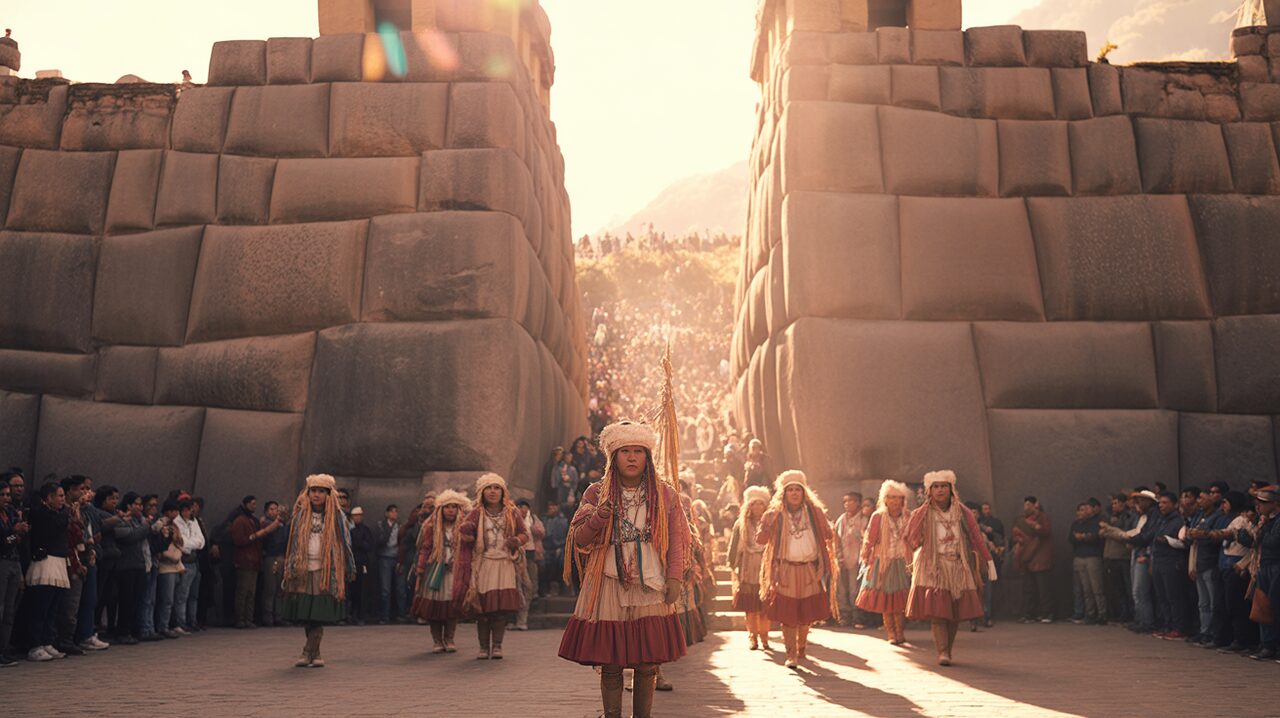
Inti Raymi — Festival del Sol takes place every June 24, coinciding with the Southern Hemisphere winter solstice. It is the most important and most attended single event on Cusco's calendar.
The ceremony unfolds across three locations:
- Qorikancha (the Inca sun temple) — the opening ritual, early morning
- Plaza de Armas — the Sapa Inca's public address and ceremony
- Sacsayhuaman — the main theatrical reenactment, performed in the afternoon on the terraces of the fortress
The Sacsayhuaman performance is the most spectacular: hundreds of costumed participants, ceremonial rites performed in Quechua, and the visual backdrop of the Inca fortress with the city of Cusco below. Stands with tiered seating are set up on the hillside; tickets for the best positions sell out weeks in advance. General admission areas on the upper slopes are free, though crowded.
Qoyllur Riti (Star Snow Festival) takes place in late May or early June, a pilgrimage to the glacier above Ausangate mountain involving Quechua communities from across the region performing ritual dances and prayers at 4,600 meters. This is an extraordinary Andean pilgrimage festival — less touristic than Inti Raymi, more physically demanding, and deeply culturally significant.
July: Virgen del Carmen — Paucartambo
Virgen del Carmen (Mamacha Carmen) festival in Paucartambo, a small town 110 km from Cusco, is one of the most celebrated festivals in the Andes. Held July 15–18, 2026 (approximately —), it features masked dancers (saqras — devil figures) performing on rooftops, elaborate processions, and culminates in a pilgrimage to Tres Cruces for the sunrise. The event draws Cusqueños from across the city; transport and lodging in Paucartambo fills rapidly.
August–September: Local Festivals and Pachamama
Día de la Pachamama (August 1) — Mother Earth Day — is observed with pagos a la tierra (earth offerings) and community gatherings across the Sacred Valley and Andean communities. Not a large public spectacle, but a living cultural practice.
Huarachicoy and Raymi season — various local community festivals tied to harvest cycles, saints' days, and Andean ceremonial calendars continue through August and September in towns across the Sacred Valley (Pisac market fair days, Chinchero, Maras).
November–December: Santurantikuy and Year-End
Santurantikuy (December 24) is Cusco's Christmas Eve artisan market — one of the most traditional markets in Peru, running since colonial times. Held in Plaza de Armas, it's where Cusqueños buy handmade nativity figures, toys, and religious icons. Extremely atmospheric; a local tradition with deep roots.
Cusco Festivals at a Glance
| Festival | Approximate Date | Key Locations |
|---|---|---|
| Carnavales | February (varies) | Neighborhoods across Cusco |
| Semana Santa / El Señor de los Temblores | April (Holy Week) | Plaza de Armas, city streets |
| Corpus Christi | May/June (60 days after Easter) | Cathedral, Plaza de Armas |
| Qoyllur Riti | Late May–early June | Ausangate glacier (4,600 m) |
| Inti Raymi | June 24 | Qorikancha → Plaza → Sacsayhuaman |
| Virgen del Carmen | July 15–18 | Paucartambo |
| Santurantikuy | December 24 | Plaza de Armas |
Practical Notes for Festival Visitors
Altitude: Cusco sits at 3,400 m. Most visitors need 1–3 days to acclimatize. Plan to arrive at least two days before any major event you don't want to miss on the first day. Symptoms of altitude sickness (headache, nausea, fatigue) typically ease with rest, hydration, and coca tea. Consult a doctor before travel if you have cardiovascular concerns.
Accommodation during Inti Raymi: June 24 and the surrounding week are the busiest days of the year in Cusco. Accommodation fills completely; book months in advance. Prices spike substantially.
Inti Raymi tickets: The ticketed Sacsayhuaman seating sells out well before the event. Check official Cusco tourism and municipal cultural channels for current season ticket sales. Free viewing is possible from public areas above the fortress, though crowded.
Getting to Paucartambo for Virgen del Carmen: Organized tour transport from Cusco is the most practical option. Public buses exist but fill rapidly. If you're going for the overnight experience (Tres Cruces sunrise), book a tour package from Cusco in advance.
Language: Most festival events are conducted in Spanish and Quechua. English-speaking guides are widely available in Cusco for cultural context at Inti Raymi and other events.
For the wider Peru picture, see the Lima Events Guide. For the full Andean festival calendar including Inti Raymi and its regional context, see Inti Raymi & Andean Festivals 2026.
FAQ
What is Inti Raymi and when does it take place? Inti Raymi (Festival of the Sun) is a reconstruction of the Inca winter solstice ceremony, performed every June 24 across three locations in Cusco: Qorikancha, Plaza de Armas, and Sacsayhuaman. It is the most attended single event in Cusco's calendar and the largest Andean cultural festival in South America.
Do I need tickets for Inti Raymi? The main Sacsayhuaman performance has ticketed seating that sells out well in advance. General admission areas on surrounding hillsides are free but crowded. The Qorikancha and Plaza de Armas segments are viewable from public spaces without tickets.
What other festivals are worth planning a trip around in Cusco? Corpus Christi (May/June) is visually extraordinary. Virgen del Carmen in Paucartambo (July 15–18 approximately) is one of the most atmospheric Andean festivals anywhere. Semana Santa (April) has significant processions including El Señor de los Temblores.
Is June the best month to visit Cusco for events? June is the peak festival month (Corpus Christi + Inti Raymi on June 24) but also the most crowded and expensive. It's also the dry season, making it the best weather window. If Inti Raymi is not your target, shoulder months (May or September) offer good weather with lower crowds.
How does altitude affect event attendance in Cusco? Plan to acclimatize for 1–3 days before your target event. The events themselves are not physically strenuous for spectators (seated areas at Sacsayhuaman, walking processions in town), but the altitude affects energy levels. Arrive early.
Summary
Cusco's festival calendar is one of the most culturally dense in the Americas. Inti Raymi on June 24 is the flagship, but the surrounding month — Corpus Christi, Qoyllur Riti, the Semana Santa processions in April — makes the city worth planning a serious cultural trip around. The events are living community celebrations, not performances made for tourists, and that distinction is felt when you're in the Plaza de Armas watching fifteen saints carried to the Cathedral, or on the hillside at Sacsayhuaman as the solstice ceremony begins below.
Search Cusco events by date and category — browse on events.lat or open the map.