Day of the Dead in Mexico 2026: Events, Dates & Where to Go
Day of the Dead (Día de Muertos) is Mexico's most distinctive cultural celebration — a two-day bridge between the living and the dead, marked by marigold altars, candlelit cemetery vigils, elaborate face paint, and street processions that fill entire cities. It runs on November 1–2 every year, with Mexico City adding a Grand Parade that has become one of the most photographed events in Latin America.
If you are planning a trip around Día de Muertos in 2026, here is what you need to know.
The Core Dates
| Event | Date | Location | Cost |
|---|---|---|---|
| Día de los Angelitos (children's souls) | November 1 | Throughout Mexico | Free |
| Día de los Muertos (adult souls) | November 2 | Throughout Mexico | Free |
| Monumental Alebrijes Parade | Saturday, October 17, noon | Zócalo to Paseo de la Reforma | Free |
| Mega Procesión de Catrinas | Sunday, October 25, 6pm | Ángel de la Independencia to the Zócalo | Free to watch |
| Mexico City Grand Parade (Gran Desfile) | Saturday, October 31, 2pm | Paseo de la Reforma, from the Glorieta de la Diana Cazadora to the Zócalo | Free |
| Mixquic Alumbrada cemetery vigil | Night of Nov 1 into Nov 2 | San Andrés Mixquic, CDMX | Free |
| Neighborhood altars and ofrendas | October 28–November 2 | All Mexico City neighborhoods | Free |
On the parade date: Mexico City has confirmed the 2026 Gran Desfile de Día de Muertos for Saturday, October 31, at 2pm — the day before Día de los Angelitos. Mexico City's official tourism site lists the route as Paseo de la Reforma, from the Glorieta de la Diana Cazadora to the Zócalo. Details can still shift, so check the parade listing in the days before.
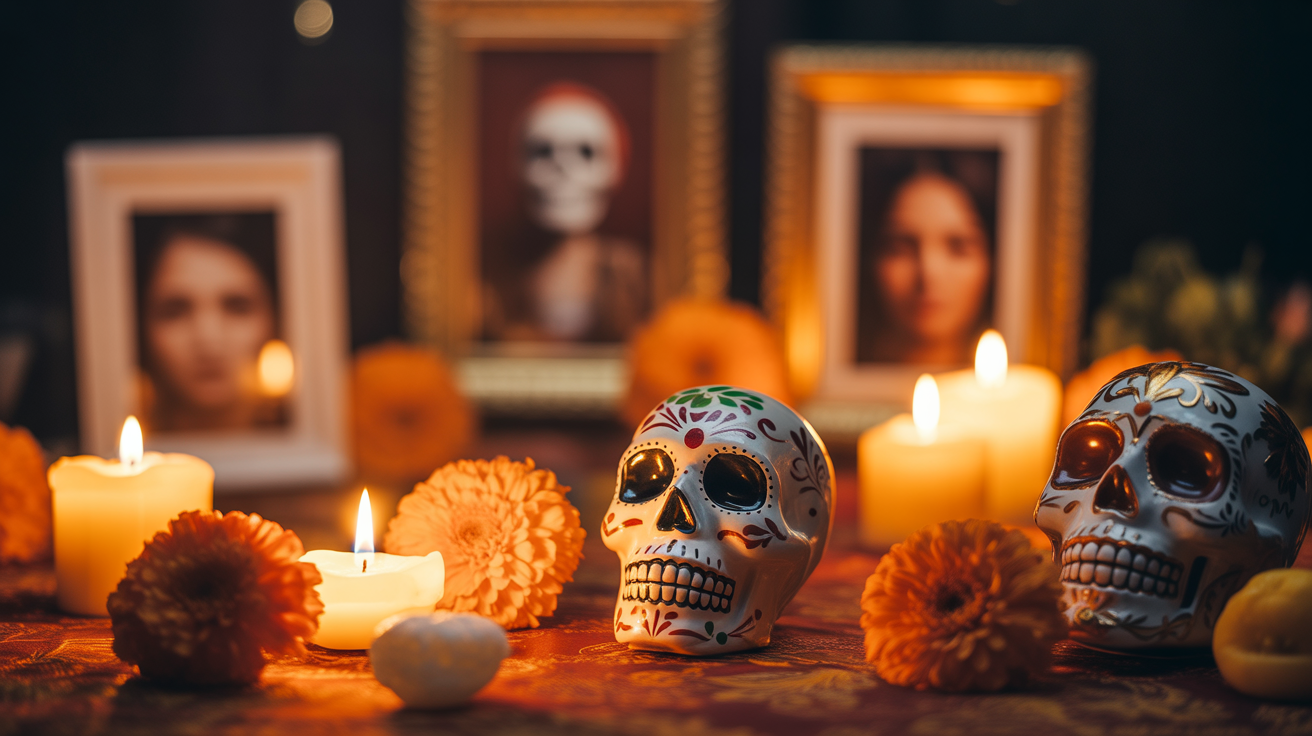
What Is Day of the Dead — and What It Is Not
Día de Muertos is an Indigenous Mexican tradition with roots in Aztec and Nahua pre-colonial ritual, later syncreted with Catholic observances. It is not a somber or macabre event by design — it is a celebration of reunion. Families believe the souls of the dead return for one day, guided home by the scent of marigolds (cempasúchil), candles, and the presence of their favorite foods on the ofrenda (altar).
It is also not Halloween, despite the date overlap. The two share some visual overlap (skulls, costumes) but the traditions are entirely separate. Many Mexicans feel strongly about this distinction.
The UNESCO inscription in 2008 as Intangible Cultural Heritage of Humanity reflects how deeply embedded Día de Muertos is in Mexican identity.
Mexico City: The Grand Parade
The Mexico City Grand Parade (Desfile de Día de Muertos) was added to CDMX's official calendar in 2016, inspired by the James Bond film Spectre. It has run annually since and has grown into one of the city's biggest annual events.
Route in recent years: Approximately 6 km along Paseo de la Reforma — starting at Puerta de los Leones in Chapultepec, passing the Ángel de la Independencia and Glorieta de la Palma, continuing along Avenida Juárez past the Alameda, down Avenida 5 de Mayo, and finishing at Plaza de la Constitución (the Zócalo). For 2026, the city lists the start at the Glorieta de la Diana Cazadora, with the parade ending at the Zócalo.
What you see: Giant skeleton floats, catrinas (elegantly dressed skeletal figures), traditional dance troupes, Aztec dancers, thousands of participants in full Día de Muertos costume, and schools of makeup artists who have spent days on their looks.
Practical viewing tips:
- The parade is free and fully public — no ticket required
- Arrive 2+ hours early for a good street position, especially near the Ángel de la Independencia (the most photographed spot)
- The stretch along Reforma toward the Zócalo stays dense the entire route
- Bring water and sunscreen — the parade runs in early afternoon
- Metro lines 1 and 7 serve the Reforma corridor; expect heavy crowds
Two More Parades Before the Big One
The Grand Parade is the last of three in October. If you arrive earlier, or want smaller crowds:
- Monumental Alebrijes Parade — Saturday, October 17, at noon. The Museo de Arte Popular's 18th edition: giant, brightly painted fantasy creatures carried from the Zócalo along 5 de Mayo and Avenida Juárez to Paseo de la Reforma. Afterwards the alebrijes stay on display on Reforma, between the Ángel de la Independencia and the Estela de Luz, until Sunday, November 8 — free to walk past any day.
- Mega Procesión de Catrinas — Sunday, October 25, from 6pm. Now in its 13th edition, it runs from the Ángel de la Independencia to the Zócalo, with thousands of people in catrina costume and makeup. It is free to watch; taking part in costume requires registering with the organizers.
The Grand Parade is listed for 2pm on October 31, from the Glorieta de la Diana Cazadora to the Zócalo. The city can still adjust details, so check its official announcement in the week before.
Best Neighborhoods to Experience Day of the Dead in CDMX
Mixquic (San Andrés Mixquic)
The most traditional and deeply felt Día de Muertos experience accessible from Mexico City. This village in the southeastern borough of Tláhuac maintains a pre-Hispanic-rooted celebration that far predates the urban parade.
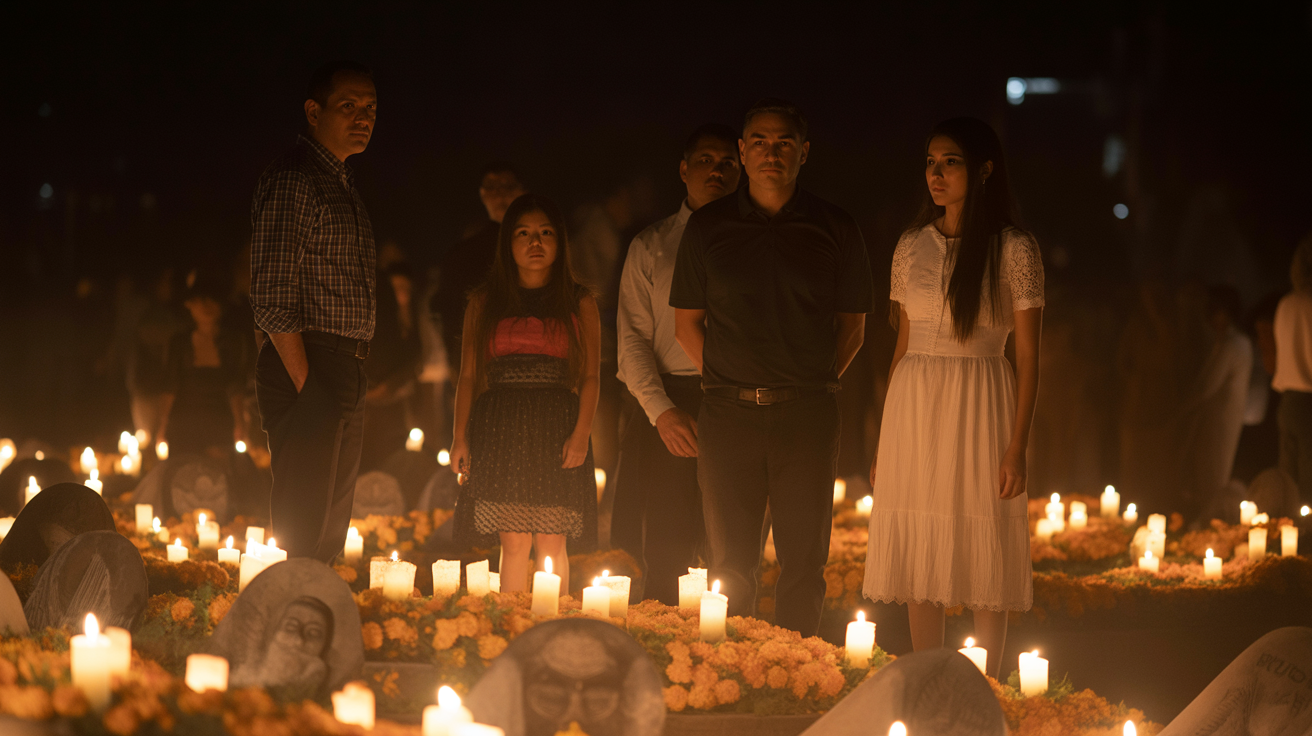
On the night of November 1 into November 2, the village cemetery fills with families cleaning and decorating graves, lighting hundreds of candles, and conducting the Alumbrada (illumination vigil). Marigold paths guide the souls. The atmosphere is reverent and open to visitors who behave respectfully.
Getting there: About 35 km from Centro Histórico. Reachable by metro (Line 12 to Tláhuac) plus local transport, or by car. Plan 45–90 minutes each way. Guided tours from Mexico City are widely sold; check the operator's own site and cancellation terms before paying, rather than booking through a social-media account.
Coyoacán
Mexico City's most bohemian neighborhood goes all-in on Día de Muertos. The central plaza and market fill with flowers, altars, food stalls, and costumed visitors. Frida Kahlo's Blue House (Casa Azul) usually runs holiday programming. It sells timed entry and sells out, so book on the museum's own site as soon as the dates open.
Coyoacán is manageable by metro (Viveros or Coyoacán station). Less overwhelming than the parade zone on Reforma, and a better choice if you want to eat and wander rather than stand in a crowd.
Centro Histórico and the Zócalo
The Zócalo and surrounding streets host large public altars, free outdoor exhibitions, and cultural events throughout the October 28–November 2 window. The Templo Mayor (ruins of the great Aztec temple) often holds programming connecting pre-Hispanic traditions to the modern celebration; INAH publishes it close to the dates.
Mercado Jamaica
Mexico City's famous flower market shifts into full cempasúchil mode in the week before Día de Muertos. Thousands of marigold arrangements fill the stalls. It is not an event in itself, but it is one of the most atmospheric places in the city during late October — highly photogenic and free to walk through.
Beyond Mexico City: Other Places to Experience Día de Muertos
Oaxaca City: Considered by many experienced travelers to be the most complete Día de Muertos experience in the country. Cemetery vigils at Xoxocotlán and Xochimilco are accessible, the city's markets and altars are extraordinary, and the cultural programming runs deep. Flights and accommodation book out very early. Plan at least 3 months ahead. Which cemetery is active on which night, and when the city actually publishes its programme, is in our Day of the Dead in Oaxaca 2026 guide.
Pátzcuaro and Lake Pátzcuaro, Michoacán: The lake village of Janitzio holds one of Mexico's most iconic cemetery vigils — indigenous Purépecha families light thousands of candles on gravestones through the night of November 1–2. The visual is singular. Getting there requires flying or busing to Morelia (or Uruapan) and continuing to Pátzcuaro. The full picture, including the travel advisory to read first: Day of the Dead in Pátzcuaro & Janitzio.
Puebla: Just 2 hours from Mexico City, Puebla runs its own parade and extensive altar-building programming. A practical day trip from CDMX during Día de Muertos weekend.
San Cristóbal de las Casas, Chiapas: The highland city integrates Tzotzil and Tzeltal Maya traditions with the broader Día de Muertos observance, creating something distinct from central Mexican celebrations.
How to Plan Your Visit
When to Arrive
The experience builds over several days. Altars and market preparations are visible from October 28 onward. If you want the full arc, arrive October 29–30 and stay through November 2. If you can only do one day, November 1 is the peak for CDMX neighborhood celebrations; November 2 is the peak for cemetery vigils.
Accommodation
Mexico City accommodation near Reforma, Condesa, Roma, and Centro Histórico books out quickly for Día de Muertos weekend. If you are reading this within about six weeks of the holiday, the well-located places are already thinning out — check availability before you fix your dates, not after. The neighborhoods closest to the parade route see the largest price spikes.
What to Wear
Costume is welcomed but not mandatory. If you choose face paint (catrina or skull style), use professional makeup artists at the many face-painting booths in Coyoacán and Centro — the quality is far better than doing it yourself, and the artists are part of the cultural tradition. Dress warmly for evening cemetery events — CDMX nights in November are cool (12–16°C).
Respectful Visiting
Cemetery vigils like Mixquic are family events. Observe, photograph with permission or discretion, and do not walk over graves. The celebration is joyful, not solemn, but it is also sincere — treat it as a guest, not a spectator sport.
Día de Muertos and events.lat
The week of November 1–2 in Mexico City is packed with official and independent cultural events — gallery openings, theater performances, food tours, and museum programming tied to the celebration. Browse events in Mexico to see what is listed for late October and early November — including the Gran Desfile on October 31 and Xcaret's Festival de Tradiciones de Vida y Muerte on the Riviera Maya, October 30 – November 2. Check individual event pages for current details.
For the ticketed side of the week, day by day (the Catrina procession, Day of the Dead lucha libre, the ballet on Chapultepec's lake), see Day of the Dead week in Mexico City 2026: what's on.
¿Prefieres leerlo en español? Lee la guía en español, written for readers in Mexico.
For the full October–November picture in CDMX, see the Best Events in Mexico City 2026 guide and the month-by-month festival calendar.
FAQ
What are the Day of the Dead dates in 2026? November 1 (Día de los Angelitos, children's souls) and November 2 (Día de los Muertos, adult souls). Mexico City's Grand Parade is on Saturday, October 31, 2026; the city lists a 2pm start along Reforma, from the Glorieta de la Diana Cazadora to the Zócalo.
Is the Day of the Dead parade in Mexico City free? Yes. The Grand Parade on Paseo de la Reforma is a fully free public event. No ticket required. Just arrive early for a good spot.
Where is the best place to see Day of the Dead in Mexico? Mexico City for the parade and urban celebration. Oaxaca for cultural depth and cemetery vigils. Pátzcuaro / Janitzio for the most visually iconic candlelit cemetery setting. Mixquic for the most accessible traditional vigil from Mexico City.
Is Day of the Dead safe for tourists? The parade and neighborhood events are family-friendly and tourist-friendly. Exercise normal urban awareness in large crowds (watch your belongings). Cemetery vigils in smaller towns like Mixquic are quiet, respectful, and safe. Check your government's current travel advisory before booking.
Do I need a tour to experience Día de Muertos? No — the public parade, neighborhood altars, markets, and most cemetery vigils are accessible independently. Guided tours add context and handle logistics (especially transport to Mixquic, Oaxaca, or Pátzcuaro). They are useful, not mandatory.
Is it disrespectful for foreigners to participate? Most Mexicans actively welcome visitors to Día de Muertos and take pride in sharing the tradition. The key is engagement over extraction — participating in good faith rather than treating it as a backdrop for content creation. Dress up if you want, eat the food, look at the altars, and be present.
Summary
Day of the Dead in Mexico is one of the most genuine, accessible, and visually powerful cultural events in the world. Mexico City gives you the grand parade and neighborhood immersion. Mixquic gives you the traditional vigil. Oaxaca and Pátzcuaro give you cultural depth. Book accommodation early, keep Saturday, October 31 free for the parade, and plan at least two days to let the city's layers come through.
The same weekend in Mexico City: the Formula 1 Grand Prix runs October 30 to November 1 at the Autódromo Hermanos Rodríguez, with qualifying on the Saturday of the parade — see our Mexico City Grand Prix guide. Everything else on in the city that month, date by date: Mexico City in October.
See what's on in Mexico this October and November — browse events in Mexico.
Also in Portuguese.